The three booklets of the first years — and why they age so fast
Mutterpass, U-Heft, vaccination card: three booklets that travel with you for years, and what a sleeve has to do so it does not end up in a drawer.
by Mara Krapp · Published on August 25, 2026 · 3 min read
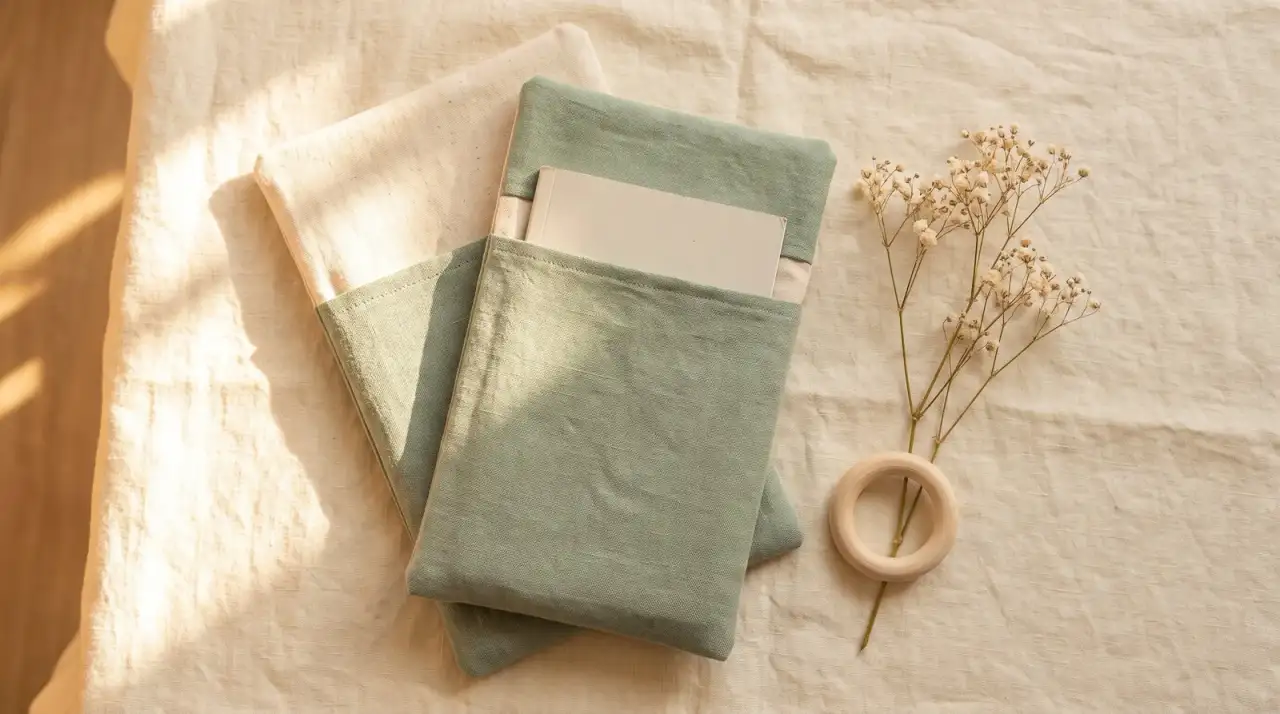
In Germany the Mutterpass comes first, quite early, and then it is with you every single day for eight months. Later the yellow U-Heft arrives, and the vaccination card, and both travel along for years: changing bag, glove compartment, nursery pigeonhole, the counter at the doctor's office.
You can tell. Ours looked well-travelled by the second trimester, and that was not carelessness — it is simply what happens to paper that lives permanently wedged between other things.
So a sleeve is less decoration than wear protection. It only earns its place, though, if it can do a few things.
The three booklets are different sizes
This is the most common reason for buying the wrong one, and it is annoyingly mundane. The U-Heft is the largest of the three, the vaccination card the smallest, the Mutterpass sits in between. There is no sleeve that fits all three at once — it would always be too tight or too loose somewhere.
And even within one kind there are differences. Editions vary in thickness by federal state and year, and a U-Heft with a dozen findings already tucked inside needs noticeably more room than a fresh one. If you are asking someone for a sleeve as a gift, it is worth measuring your own booklet rather than trusting the description in a listing.
How to tell whether a sleeve is any good
It has to wipe clean. The U-Heft sits on the counter at the paediatrician's, in the bag next to the bottle, in the car in summer. Anything you cannot quickly wipe down looks tired within a year.
It must not lock the booklet away. People write in it at the practice, usually standing up, in a hurry. If you have to prise the booklet out every time, the sleeve is at home in a drawer after three appointments. That is where most pretty sleeves fail.
And it should have room for slips of paper somewhere. You are constantly handed them — findings, appointment cards, stickers. An inner pocket decides whether they are still around at the next visit.
Two things I would not do
Laminate. It sounds sensible and isn't: nobody can write in a laminated booklet any more, and writing in it is the entire point.
And heavy padding. It feels lovely in the hand and makes the U-Heft so bulky that it no longer fits any side pocket — which is where it needs to go.
Whether a name belongs on it
Practically, it helps. Waiting rooms rarely hold just two yellow booklets.
I would still stick to the first name. These booklets sit in a lot of places where you are not standing next to them, and a full name with a date of birth is more than a booklet needs to carry around in public.
With several children I find different motifs more useful than names anyway. You recognise a motif from two metres away; a name has to be read.
If you get to choose, get the sleeve for the Mutterpass as soon as you receive it, and the ones for the U-Heft and vaccination card in the first weeks. The first creases happen early, and they never come out again.