Keeping milk teeth — and the cord stump, the first curl
Keeping milk teeth, the cord stump and the first curl: at some point a tiny thing is lying on the kitchen table. A few things I have learned since.
by Mara Krapp · Published on August 27, 2026 · 6 min read
Updated on October 27, 2026

There is this moment when some tiny thing is lying on the kitchen table. The dried-up cord stump. A lock of hair folded into a tissue. Years later, a milk tooth. And you stand there thinking: throwing it away is out of the question. But where does it go?
Mine sat in a drawer for a while, wrapped in a folded note, because nothing better came to mind. That turns out not to be the best plan. If you want to keep milk teeth, whether one or eventually twenty, a few simple habits help. So here are the things I know now — not as instructions, more as what I wish someone had told me back then.
The important part is boring: it has to be dry
Almost everything that goes wrong with these keepsakes comes down to the same thing. Something goes into a closed tin too early, while it still holds moisture, and then what happens in a damp, sealed little chamber is exactly what you would expect.
The cord stump needs a few days for that. I put it on a piece of kitchen paper somewhere with air but no sun — the windowsill is tempting and usually the wrong choice. It is ready when it is hard and feels like almost nothing when you pick it up.
A milk tooth is the same, with one step before it: it should be cleaned. More on that in a section of its own below.
Hair is the easy one. It lasts more or less forever as long as it stays dry. The only thing I have made a point of remembering: tie the strand with a thread before you cut. Otherwise you end up not with a curl but with loose hairs that never find their way back together.
Cleaning and drying a milk tooth
There is tissue on a tooth that has just come out. I give it a quick rinse with lukewarm water and a soft brush, no detergent, and then leave it lying out in the open for a whole day. I know that on an evening when a proud child is standing in front of you with a gap in their smile, this is the least likely thing anyone will do. But it is the difference between a tooth you still like looking at in twenty years and one that has gone dark.
A kept tooth turning slightly more yellow over the years is normal. If you are unsure, ask at the dentist's at your next check-up.
Label it. Now, not later.
This is the advice I hear most often from other mothers, and always in the same tone of voice — as though they had learned it too late themselves.
The second tooth looks like the first. By the fourth, nobody remembers which came when or whether it sat top or bottom, and with two children you certainly no longer know whose it was. A slip of paper in the tin is plenty. Date, which tooth, which child. Ten seconds that save a small story for later.
All together, or each on its own
Both work, and I suspect most people end up doing both.
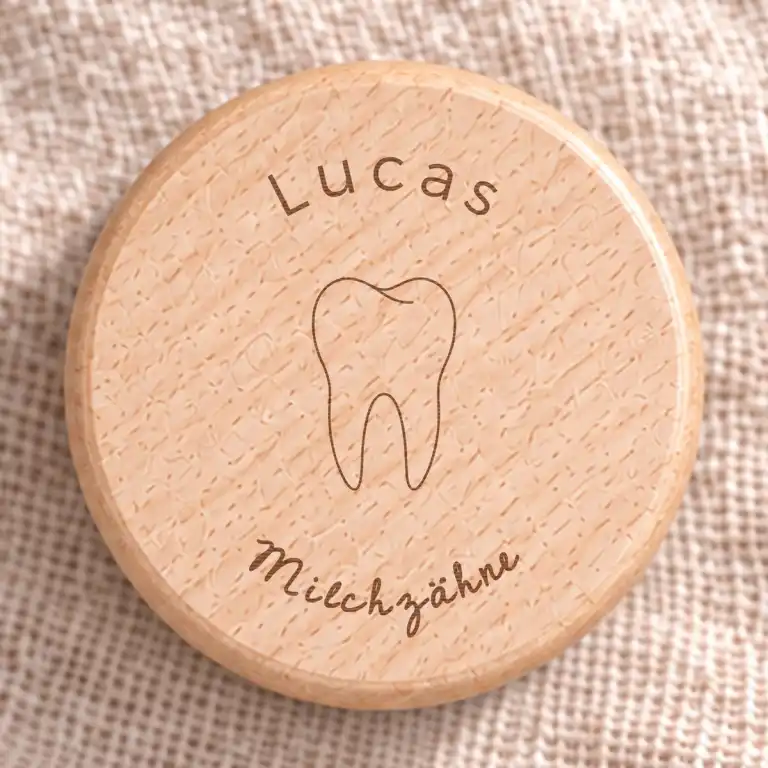
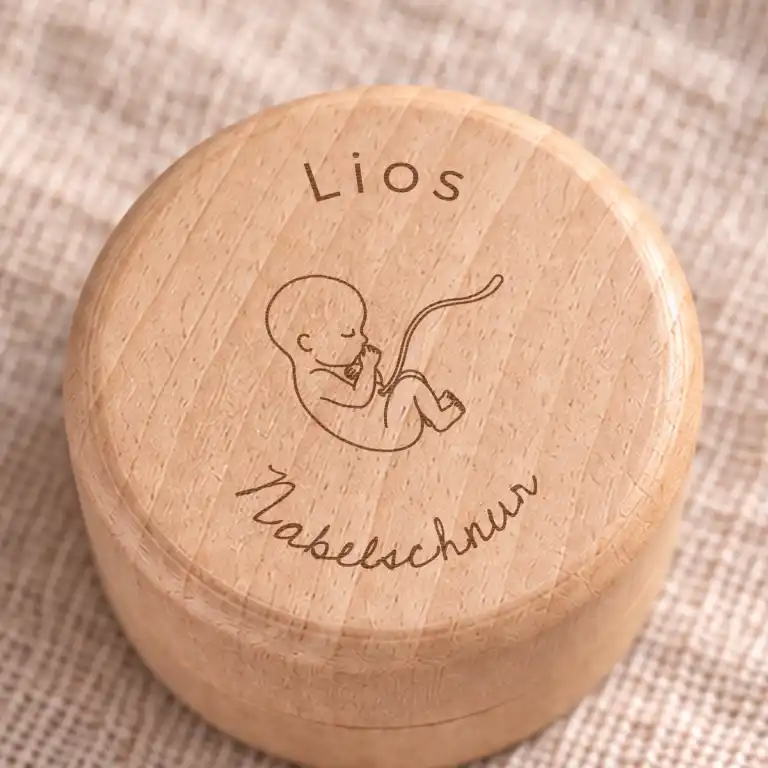
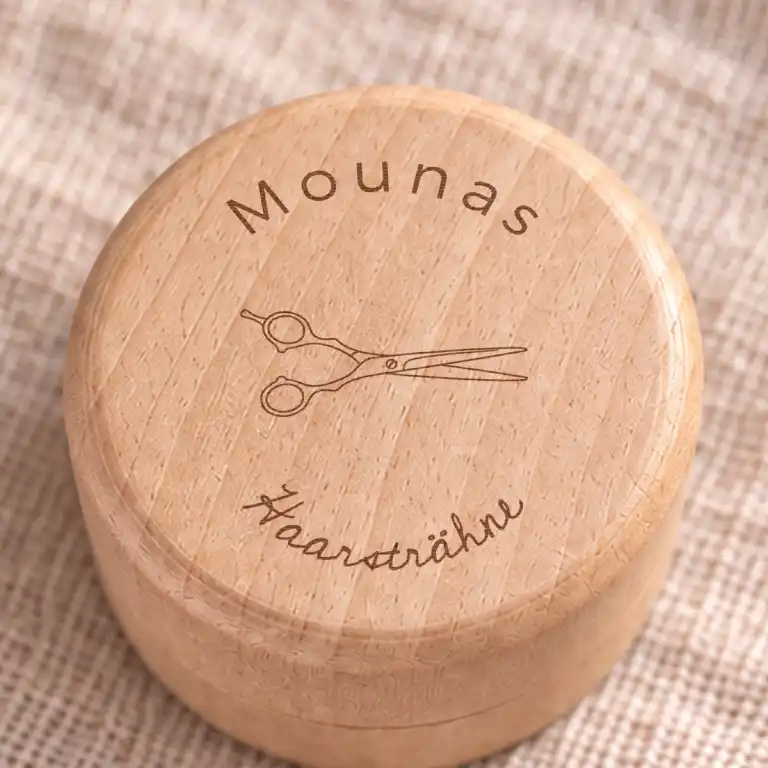
Day to day, separate tins are easier. There is the tooth box "Tooth" for the tooth, the umbilical cord tin for the cord stump and the lock of hair tin for the first curl. The milk tooth turns up years after the lock of hair, and getting the big box out every time is a nuisance. Small tins can stand somewhere you actually see them.
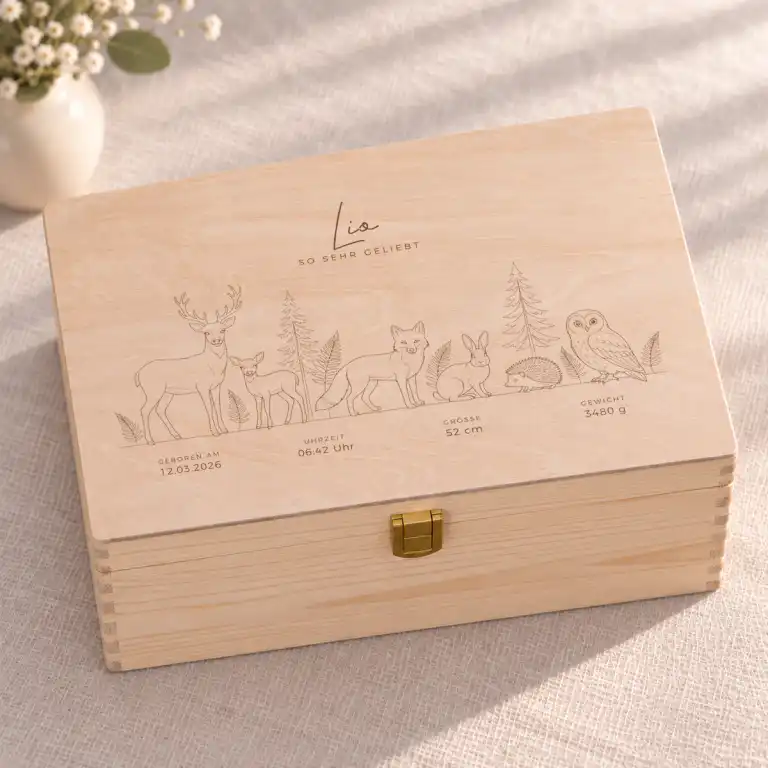
For the end of it, one shared box is the nicer thing, for example the keepsake box “Woodland animals”. When your child moves out one day, a box with everything lying side by side is not the same as four tins from four different drawers. I like the thought of handing that over in one piece.
I have ended up with wood, and there is a practical reason: wood takes up leftover moisture instead of sealing it in. An airtight plastic tin is merciless precisely when you were impatient about the drying.
What I leave out
Cotton wool. It holds the moisture against the thing instead of away from it.
Airtight bags at the very start — which is exactly when there is still moisture around.
And the fridge, which gets suggested now and then. For something dried, the cold does nothing, and the damp in there does more harm than good.
That is really all of it. Let it dry, label it, put it somewhere dry and dark. The rest is the question of whether you want to keep it at all, and nobody can answer that one for you.
And for the booklets that accompany the child from the start there is a text of its own: Mutterpass, U-Heft, vaccination card: sizes and the right sleeve.
Frequently asked questions
Do you have to clean a milk tooth before keeping it? Yes. A quick rinse and a thorough drying, otherwise it can start to smell or darken after a while. If you are unsure, ask at the dentist's.
Does a kept milk tooth turn yellow? A gradual yellowing of the shed tooth is considered normal. It is not a sign that the storage was wrong.
When do the first milk teeth fall out? According to proDente, the change of teeth begins around the age of six and runs until about twelve. So you have plenty of years to choose a tin, and you don't have to look for one on the evening the first tooth comes loose.
How do I label the tin? Date, which tooth, which child, on a small slip of paper inside the tin. That is enough and takes ten seconds.
Do the cord stump, the curl and the tooth belong in the same tin? They can, as long as everything is dry. Separate tins are more practical because these things arrive at very different times.